Tuesday, 12 September 2017

Lean construction scheduling

Scheduling is an important part of project management in construction. It is a list of project milestones, activities and deliverables with start and end dates. These are based on other information in the schedule. This includes budgets, resource allocation and activity timelines. It will also list links to dependencies and scheduled events. Elements in the project schedule are usually based on the work breakdown structure for the whole project.
Keeping a construction project on track is the difference between finishing a project on time and making a profit, or not. Lean construction scheduling is a way to design processes and procedures to minimize waste in the workplace to maximize value. Schedules detail each construction activity for the project team and how long it should take to complete each one. Lean construction scheduling is vital to all parts of the daily management and reporting process of a project's status. It helps reduce all forms of waste in the construction process.


Forms of construction waste
There is always a risk of waste during a construction project so using lean construction scheduling helps organizations plan to avoid waste of money, resources and manpower. Forms of construction waste include:
  • time – looking for things, ordering materials, etc
  • transport – materials handling, deliveries, etc
  • staff downtime – waiting for instructions, information and deliveries, etc
  • rework and corrections – correcting poor or incorrect work and updating plans
  • overproduction – producing more than ordered
  • inventory – too much or too little stock on hand
  • over processing – doing more than the client can pay for.

Benefits of lean construction scheduling

Using lean construction scheduling adds value to the process of constructing a building. It will also help to uncover where there is wasted time and staff potential in the process.
Schedules keep the work on track and you can see how the project works are progressing. This can be important as there may be penalties for meeting milestones late. Meeting milestones late will not be good for your reputation. Benefits of lean construction scheduling includes:
  • Making it possible to move a project through the critical path of activities of the construction process.
  • Means it is easy to change priorities for activities and resources when the need arises. This reduces the peak demand for resources. It eliminates standing down other resources and bringing them back later at an extra cost.
  • Showing clear team goals and milestones. It also shows the path of how to meet them on time. The schedule will give the team a pathway to follow to achieve those milestones on time. A schedule defines the sequence of activities to let project managers what to plan for.
  • Providing dates for material deliveries.
  • Monitoring the progress of work activities as well as those of subcontractors and suppliers.
  • Providing subcontractors and suppliers with schedules at the time of the tender and contract sign-off prevents misunderstandings and disputes down the track.
  • Allowing for planning what resources you need where and when. The last thing you need is too many or too few people on the job to get it done on time.
  • Providing valuable feedback about how the construction project is proceeding. It is easy to see when a project is slipping the schedule. This give you the chance to take action by bringing in extra resources or working overtime to make up the time.


    Lean construction project scheduling is a tool a project manager uses to systematically manage all parts of a construction project. This includes assigning the relevant skilled human resources to get the work done. The schedule can be regularly reviewed using a good task software to check actual outcomes against the plan.
    There is no room for mistakes in lean construction scheduling. Mistakes cost time, money and your reputation. Using good planning strategies and software will keep your construction projects on track.
Lean construction scheduling

Monday, 4 September 2017

Risk assessment template for construction

Original Source: Generic risk assessment template for construction

Employers are responsible for workplace health and safety. All construction companies must have a workplace health and safety policy that outlines the its commitment to workplace safety.
Construction businesses need to complete a risk assessment template to identify and manage workplace risks. There are inherent risks with all construction projects that threaten those who work in construction. These risks can also damage your reputation and profit margins. Having a construction risk assessment template helps keep construction risks under control. Here are some things you need to consider when compiling a risk assessment template.

Workplace health and safety policy

Organizations must show a commitment to working within the Health and Welfare rules to ensure: workers complete all workplace activities in accordance with policies and procedures, the relevant people update the Safety Statement regularly and communicate the results, the organization implements and maintains all protective and preventive measures identified , the organization prevents behaviour likely to endanger others, employees have safe plant and equipment and work systems in the workplace, emergency plans are in place, well communicated and updated as required. Where it is not possible to eliminate hazards, minimize them using safety procedures and personal protective equipment, ensuring there is always safe entry and exits to the workplace. Also to ensure employees store hazardous goods and chemicals correctly to prevent injury to those in the workplace.

What is a risk assessment template?

  • A construction risk assessment template is where an organisation records its evaluation of workplace risks. It systematically evaluates all workplace risks by looking at:
  • what can cause harm to workers?
  • can you eliminate the risk?
  • if not – what can you do to minimize and control the risks?
Keep in mind that:
  • Hazards can be anything – materials, equipment, behavior in the workplace and work practices.
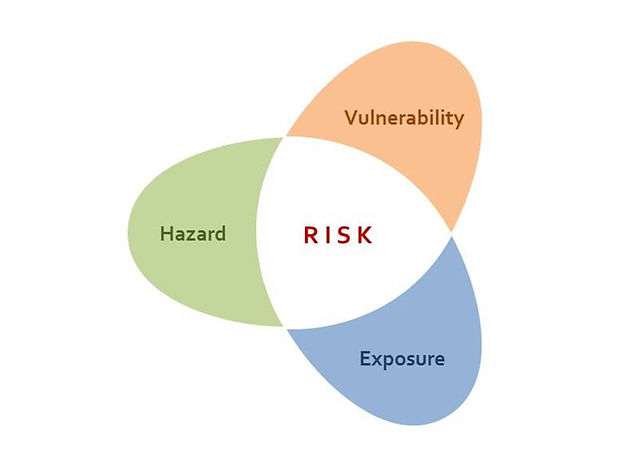
  • The risk is how likely is the hazard to harm someone.
Assessing risks
How to assess workplace risks can be broken into five basic steps:
  1. Identify hazards and who is at risk. Look for things that can cause harm in the workplace and who it has the potential to affect.
  2. Evaluate and prioritize risks. Estimate the severity and probability of each risk and prioritize them in order of importance.
  3. Decide on preventive action. Identify appropriate actions and procedures to eliminate or minimize each risk.
  4. Taking action. Take action by putting in place preventive and protective measures in a plan that prioritizes the risks. It is unlikely you can resolve everything immediately. Specify what actions are taken by who and by when.
  5. Monitor and review. Monitor and review the risk assessment template on a regular basis. In construction, risks can change a lot and often. You may need risk assessments as a record of your commitment to workplace health and safety if there are problems in the future.
Roles and responsibilities
The key role of a risk assessment is set out in the relevant legislation. Employers have a general duty of care towards the safety of all their workers. They must put policies and procedures in place to protect the health and safety of staff members. These obligations include:
  • preventing occupational risks
  • providing adequate ongoing training and information to all workers
  • ensuring adequate measures are put in place to mitigate workplace risks.
Health and safety in the workplace is everyone’s responsibility including employers, workers and contractors.
Employer’s responsibilities
Employer’s responsibilities include:
  • preventing behaviour that puts other workers at risk
  • managing work activities so there are no adverse health or safety effects on workers
  • providing a safe workplace
  • being proactive in preventing risks to employees
  • providing training, information, tools and supervision at the appropriate level for the skills of workers
  • providing appropriate personal protective clothing and training on when and how to use it
  • providing and maintaining welfare facilities such as a medical room equipped with a trained person.
Employee’s responsibilities
An employee’s responsibilities include:
  • complying with workplace policies and procedures and reporting unsafe practices, procedures and equipment
  • taking responsibility for their own safety and for the safety of others
  • cooperating with workplace policies and procedures
  • reporting any hazards, injuries, near misses, accidents or incidents in the appropriate manner
  • using the personal protective equipment provided in the appropriate manner and situations
  • attend the training required
  • behaving in a professional manner and in a way that will not put yourself or others at risk in the workplace
  • not coming to work under the influence of alcohol or drugs.
 Contractor’s responsibilities
Construction sites have contractors working on site. Their responsibilities include:
  • providing all employees with site-specific health and safety instructions and induction
  • identifying hazards, eliminating them and reducing the risks on a constructions site
  • monitoring employee compliance and take relevant action where required
  • working in a safe manner to protect themselves and others from harm.
Risk assessment templates are complex and these are just a few things to take into account. There is no room for complacency on a construction site. Get good quality software to help keep track of your risk management plan.


Wednesday, 30 August 2017

Improving construction safety

Improving construction safety

Working safely on construction sites is a constant challenge. Improving construction
safety is of paramount importance for all construction companies. There
is no denying, construction sites are hazardous places. Workers face
daily challenges including preventing falls, and chemical and trip
hazards. Construction health and safety is on everyone’s mind. What do
you do to reduce the chance of accidents on work sites?


Improving construction safety

Innovative thinking

The accident rate would be higher on work sites without the innovative thinking of construction companies. They are devoting extra resources to keeping workers safe. Developing new practices and adopting technology can improve construction safety up to 100%. Keeping up with changing legislation can challenge improving safety protocols. Encourage an open exchange of ideas to find new ways to build on construction safety.

 Software and technology

Technology improves managing construction projects. Software can link into your current processes and procedures, and existing safety programs. This allows everyone including workers to interact online using software tools.
Trying to track everything the old-fashioned way no longer works with pen and paper. It is time-consuming. Use software to track changes to construction safety priorities on an organisational level. Software platforms are a guaranteed approach to optimizing construction safety. You can configure software packages to meet individual organisational needs.

Advocate continuous improvement

Knowledge is a powerful tool. When workers know how to work with an organizations support, it creates stability. Stability leads to better ways to do the same work faster and safer. This gives the work site a culture of continuous improvement, which results in greater efficiency and productivity.

Document your safety procedures and plan using software to revitalize your business processes.

Proper equipment

Working on a construction site is dangerous enough without cutting corners with the use of incorrect equipment. All equipment should be suited to the job, and all machinery and equipment well-maintained. Most construction workers are subcontractors, what they do affects your reputation. And subcontractors, hire subcontractors to help them with the work. Make sure that you hire those with a good reputation and the right equipment to do the job. Check licences are in place for difficult jobs (for example, heavy crane work). Look at their own safety records from their work on past jobs. Check they are prepared to live up to your construction safety standards. And, make your stand on construction safety clear as part of the contract.


Conclusion

Regardless of whatever else you do, without the right management tools your organisation can be at further risk, you can even use some FREE RISK ASSESSMENT TEMPLATES. Technology has the ability to bring change and progress today. It has never been easier to integrate safety management software into you companies project safety alongside your processes and procedures. It is vital you keep up-to-date and accurate construction health and safety records.
Whatever your goals for improving construction safety, your organisation can have it all cost-effectively. Combine education, inclusiveness, innovation and commitment along with smart software to improve safety on your construction site.

Monday, 21 August 2017

Construction Risk Assessment

 Original article: Construction Risk Assessment

Construction projects can be dangerous places so understanding risk assessments and safety management is vital.  Everyone from the project manager to the site foreman need to be aware of any and all risks at every stage in the construction process. So, controlling risks takes good risk management to prevent or minimize the realization of any risks.
A construction risk assessment should be first addressed at the design stage to address any potential risks before the project ever begins. Next up, the project managers should complete a project risk assessment before any worker sets foot on the site and also have a method to monitor any risks at each stage of construction, a tool that can consider all the risks and possible risks. The tool or system should also be able to help the project manager mitigate any perceived risks and the financial cost associated with each risk. Also, it is important to be able to consider the cost to the whole project if they were to occur.
This brings us to the question; how do you stay on top of managing project risk assessments? The answer is you need good processes, procedures and construction management software. Here are some steps to help keep construction risks under control.

Know the source of potential risks

To manage construction risks, complete a construction risk assessment. Be thorough and consider the following areas:
  • Contractual risks. Missing milestone deadlines can cost time, money and a business its reputation.
  • Occupational risks. The nature of a construction site means there are many risks that can cause injury and possible death. Worker behaviour, technology, working methods, weather or a third party can cause accidents.
  • Project risks. The lack of good project management, workplace procedures, or workplace policies and procedures that are ignored and poor time management are just few project risks.
  • Natural risks. Natural risks (storms, earthquakes) are beyond your control but can shut a construction site down.
  • Financial risks. Financial risks include rising interest rates, a surge in material prices and a lack of sales.
  • Stakeholder risks. Use project management software to bridge communication problems, miscommunication over changes and deliverables.
  • Competition. Competitors can make life tough. They can drop prices to undercut prices and build times. This can put you under pressure to meet the same terms and put the project's profit at risk.

Assess risks for their order of importance

Assess the risks into order of importance from most likely to occur to the least likely. Also, rate each risk for the level of damage it can do if it does occur and the potential cost to your business.

Dealing with identified risks

Construction sites are busy, dangerous places. Although the risks are varied, there are four basic management techniques to manage risks:
  • Avoid. You may choose to only take on a project in the summer of an area that has winter snow to avoid the risk of time delays.
  • Transfer. Ensure there are good contracts in place with suppliers and subcontractors so they take responsibility for missing deadline agreements with the company. Make sure the project has the appropriate insurances to cover any accidents.
  • Mitigate. Some risks you cannot completely remove. You can reduce the dangers of safety hazards, for example, but you cannot completely remove them.
  • Accept. Seasonal weather can be difficult to avoid. But, with planning and long-range forecasts you can work to reduce the impact on the project.

    Use the right software

    Once you decide how to deal with the risks arising from a project risk assessment, use technology to help optimize risk management methods. Good construction project management software helps manage all facets of a construction project. From costs to risk management, good software can make all facets of construction management more manageable and save time by:
  • simplifying the project risk assessment process
  • helping businesses comply with legislation
  • assessing and recording all tasks and risks on a risk assessment matrix
  • opening up transparent communication between managers, workers and stakeholders
  • adding everyone involved in the project along with their contact details into a central database
  • producing project-specific risk assessment and method statements
  • customizing the software to meet the needs of individual projects
  • providing a safe repository for project related documents that is available 24/7


Thursday, 3 August 2017

What is a Construction Punch List?

Republished from the RaptorPM blog titled:

What is a Construction Punch List?


What is a Construction Punch List?


A construction punch list, is a list of things that do not conform to contract specifications near project completion. Also known as a snag list, it defines everything that needs addressing before final sign off and occupancy of the building.

As every contractor knows, construction projects can be difficult to manage. They can involve multiple stakeholders, risk assessments, O&M manuals plus lots of other project documentation. If any detail is missing it can delay the project completion with the knock on effect of costing the contractor  both time and money, not to mention the threat of legal action. This is why staying organized at every stage is critical to the success of any project.

When it comes to a punch list, it can be minor repairs to things like finishes and finishing off tiles; installing anything that is still outstanding such as an air conditioning system and cleaning the building ready for use. A punch list includes any final changes to the scope of the project made at the last minute and even warranties or other paperwork that needs chasing up.
The punch or snag list in an integral part of the construction contract. It is a control mechanism to meet the quality standards of the project plans and client’s expectations. There may be penalties if there is something the client is not happy about or the work does not meet satisfactory standards.
Creating an accurate punch list keeps everyone happy. It gives everyone a clear understanding of what work there is to do and timelines for completion. It is also an opportunity for the client to bring up any other concerns. The requirements for a punch list are set out during construction project planning. It is the responsibility of everyone involved with the project to ensure the punch gets completed on time. 
Final handover
The punch list is a critical step in the construction process. Task and Project Tracking means there are few surprises when you get to the end of the project. These are the last tasks to complete the building for final handover to the new owners.